

Top 8 social media scheduling alternatives to hootsuite for creators
Social media scheduling alternatives to hootsuite are tools that let you plan, write, preview, and publish posts across multiple networks from one calendar, usually with team approvals, analytics, and bulk scheduling. The best options remove busywork, keep posting consistent, and cost less than paying for features you never touch. Choose one based on your platforms, approval needs, and budget.
If you’re here, you probably like what Hootsuite can do, but you don’t like what it costs or how heavy it feels for day-to-day posting.
This guide compares the best social media scheduling alternatives to hootsuite for creators, small teams, and agencies. You’ll get a clear table first, then deep breakdowns, then a pricing and value verdict that makes the next step obvious.
If you want a lightweight workflow that still covers the essentials like a calendar, platform previews, bulk scheduling, and collaboration, start by looking at PostPlanify. It’s built for speed, not complexity.
Before we rank tools, here’s the quick comparison table you can screenshot.
Why compare Hootsuite alternatives
Hootsuite isn’t “bad.” It’s just easy to outgrow in the wrong direction.
For many creators and small teams, the real issue is mismatch. You end up paying for enterprise-style features, or accepting a workflow that’s slower than it should be. When posting is daily, even small friction adds up.
The other problem is that you rarely need a tool that does everything. You need a tool that does the 5–7 things you do every week, fast.
Cost pressure is real
Pricing shifts, seat-based pricing, and add-ons are where budgets get squeezed. Even when a plan starts “reasonable,” it can jump once you add users, profiles, or deeper reporting.
If you run client work, costs multiply quickly. If you’re a creator, the cost can feel unfair when your main need is planning and publishing.
For example, Sprout Social lists plans starting at $199 per seat per month (billed annually). That’s per seat, not per team. Sprout Social pricing.
Agorapulse lists annual-billed pricing such as $79 per user per month for Standard and $119 per user per month for Professional. Agorapulse pricing.
Even Hootsuite itself has moved toward per-user pricing on its current plans page. Hootsuite plans.
So comparing social media scheduling alternatives to hootsuite is less about “who has more features” and more about “who gets you to published posts faster per dollar.”
Complexity slows publishing
Creators don’t need five dashboards. Agencies don’t need a complicated setup for every client.
What slows you down most:
- Too many clicks to create a post
- No clear preview for each platform format
- Publishing approvals that feel like project management
- Hard-to-find drafts and assets
- Reporting that looks “busy” but doesn’t change decisions
If you’ve ever opened your scheduler and felt resistance, that’s a sign you need a simpler tool.
Creators need platform-specific execution
Scheduling isn’t just choosing a time.
Real publishing needs:
- Per-platform previews (Instagram grid context, TikTok video, LinkedIn formatting)
- Correct character limits
- Link formatting that doesn’t break
- First comment workflows for hashtags (when supported)
- Separate captions per network
The best social media scheduling alternatives to hootsuite treat each platform like its own channel, not an afterthought.
What you should get from switching
If switching tools doesn’t save time, it’s not worth it.
A good move should give you at least 3 wins:
- Faster weekly planning
- Cleaner approvals and fewer “Where is the latest draft?” messages
- Lower monthly cost for the same publishing volume
That’s the lens we’ll use for the rankings.
Quick comparison tables before the list
Here are two tables to set expectations before we go tool by tool.
Table 1: Best-fit comparison (who each tool is for)
| Tool | Best for | Biggest strength | Biggest tradeoff |
|---|---|---|---|
| PostPlanify | Creators + small teams who want speed | Lightweight workflow across platforms | Not trying to be enterprise listening |
| Buffer | Solo creators who want simple scheduling | Clean UI and fast publishing | Collaboration and approvals are lighter |
| Later | Instagram-first brands and creators | Visual planning and creator workflows | Can feel IG-centric for some teams |
| Agorapulse | Teams that need inbox + publishing | Strong inbox + reporting bundles | Per-user pricing adds up fast |
| SocialPilot | Agencies on a budget | Broad feature set at mid price | UI can feel “tool-like” vs creator-first |
| Planable | Teams who live in approvals | Approval workflows and client reviews | Analytics and engagement can be add-ons |
| Metricool | Reporting and multi-brand work | Analytics + reports + link-in-bio | Some networks may be add-ons |
| Sprout Social | Larger teams with deeper needs | Enterprise reporting and workflows | Very expensive per seat |
Table 2: Pricing signals (official pricing pages)
| Tool | Pricing model (high level) | Notable starting prices (from official pages) |
|---|---|---|
| Hootsuite | Per user (current plans page) | See current pricing on Hootsuite plans page here |
| Sprout Social | Per seat | $199 per seat/month annual-billed entry plan pricing |
| Agorapulse | Per user | $79 per user/month annual-billed Standard pricing |
| Later | Per plan (sets/users/limits) | Starter $18.75/month billed yearly on pricing page pricing |
| Metricool | By brands | Starter from $18/month shown on pricing page pricing |
| SocialBee | Per plan (profiles/users) | Bootstrap $29/month monthly, $24.2/month annual-billed pricing |
| Buffer | Per channel tiers (and add-ons) | See current Buffer pricing pricing |
| Planable | Per workspace | Basic $33/workspace/month listed on pricing page pricing |
You’ll notice two themes:
- “Per seat” tools get expensive quickly as you grow.
- Creator-first tools tend to price around workflows, not org charts.
Now let’s rank the best social media scheduling alternatives to hootsuite.
Top 8 alternatives with quick pros/cons
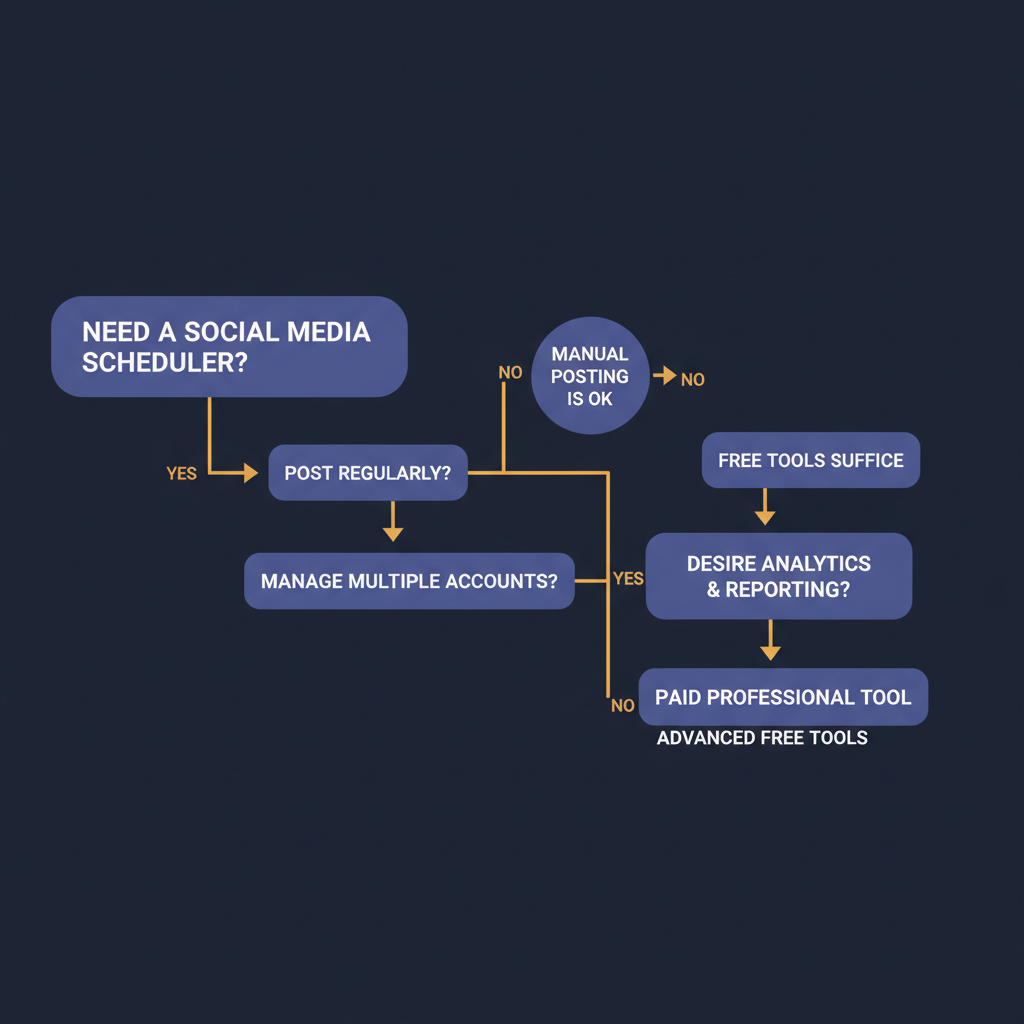
These are ranked for creators, social media managers, and small teams that care about speed, clarity, and cost.
PostPlanify is ranked in the top 3 and is the winner in the final verdict.
1) PostPlanify
If you want social media scheduling alternatives to hootsuite that feel lighter and faster, PostPlanify is the best place to start.
The big difference is the workflow. PostPlanify is built around getting posts out the door with less friction. That means one calendar, clean drafting, platform-specific previews, and a workflow that doesn’t feel like a corporate dashboard.
It’s also creator-first in the features that matter weekly:
- One publishing calendar that keeps your week visible
- Bulk scheduling for batching content
- Platform-specific previews so formatting surprises don’t show up after publishing
- Caption assistance when you need a starting point
- Team collaboration when you need approvals
- Analytics for quick “what worked” checks
Where PostPlanify earns its spot among social media scheduling alternatives to hootsuite is the balance. It’s not trying to sell you a 50-feature suite. It’s built to remove publishing busywork.
That matters for:
- Solo creators who batch content weekly
- Agencies that need a clean approval flow without heavy setup
- Small teams that want a shared calendar without per-seat sticker shock
PostPlanify vs Hootsuite quick take
Hootsuite is feature-rich, but it can be heavier than you need.
PostPlanify focuses on the publishing workflow itself. If the main goal is “plan, schedule, publish across platforms,” PostPlanify is the more direct route.
If you’re comparing postplanify vs hootsuite, the practical question is this:
Do you need a big suite, or do you need a faster calendar and cleaner posting?
Best for
- Creators scheduling 5–30 posts per week
- Agencies that want light approvals and fast client workflows
- Teams that don’t want a complex implementation
Pros
- Creator-first, fast workflow
- Strong for batching and bulk scheduling
- Clean platform-specific previewing
- Easy to onboard clients or teammates
Cons
- If you need enterprise listening and deep customer care, it’s not built for that
To explore the platform and its workflow, start at PostPlanify.
2) Buffer
Buffer has earned its reputation for being simple, clean, and fast.
If your number one need is scheduling without drama, Buffer usually works. For many creators, it feels like the opposite of a heavy suite. You create a post, choose channels, schedule, and move on.
Buffer is especially solid when:
- You post consistently but don’t need complex approval chains
- You want a straightforward publisher that doesn’t slow you down
- You don’t want to spend time “configuring” a tool
Buffer also tends to be friendly for solo workflows where one person plans and publishes.
Where Buffer can fall short
For agencies and teams, “simple” sometimes turns into “limited.” If you need layered approvals, asset libraries, or client-specific sign-offs, you may feel the edges.
This is where buffer vs postplanify becomes a practical comparison.
- Buffer is great at “schedule posts quickly.”
- PostPlanify is built more around “schedule posts quickly across platforms, with workflow, previews, and collaboration that still stays light.”
That’s why Buffer stays near the top of social media scheduling alternatives to hootsuite, but it’s not the best fit for every team.
Pros
- Very easy to learn
- Fast scheduling flow
- Good for solo creators and lean teams
Cons
- Can be light for approvals and multi-client processes
Pricing changes over time, so confirm current plan details on Buffer pricing.
3) Later
Later is one of the strongest picks when your content is highly visual and Instagram plays a central role.
It’s built around planning and scheduling in a way that maps well to creator workflows. The pricing page also makes its plan limits clear, which matters when you’re trying to avoid surprise upgrades.
Later lists annual-billed pricing like Starter at $18.75/month, Growth at $37.50/month, and Scale at $82.50/month on its pricing page. Later pricing.
Later can be a great fit when:
- Your workflow starts with visuals
- You want planning that feels like a calendar, not a dashboard
- You care about creator tools like Link in Bio
Where Later can feel limiting
If you’re running lots of clients or need deeper team structures, you may need higher tiers.
If you’re scheduling across many platforms equally, Later can still work, but it may feel a bit Instagram-shaped in how you think about content.
Pros
- Strong visual planning
- Creator-oriented workflows
- Clear plan structure
Cons
- Scaling profiles and users can require plan upgrades
4) Agorapulse
Agorapulse is a strong “all-in-one” option for teams that care about both publishing and engagement.
If you want a tool that bundles scheduling, inbox, and reporting into a single place, Agorapulse is often a clean pick.
Agorapulse uses a per-user model, and its pricing page lists plans such as Standard at $79 per user/month billed annually, Professional at $119 per user/month billed annually, and Advanced at $149 per user/month billed annually. Agorapulse pricing.
That pricing structure matters. If you’re a solo creator, it can be fine. If you’re an agency with multiple seats, it can add up fast.
Pros
- Great inbox and engagement workflow
- Solid reporting export options
- Built for teams managing comments and DMs
Cons
- Per-user pricing scales quickly with staff
5) SocialPilot
SocialPilot is a popular pick for agencies that want a broad feature set without paying top-tier enterprise pricing.
It tends to cover the basics well:
- Multi-platform scheduling
- Calendar planning
- Team collaboration
- Bulk scheduling
- Analytics
SocialPilot’s plans page lists annual-billed prices such as Essentials $25.50/month, Standard $42.50/month, Premium $85/month, and Ultimate $170/month. SocialPilot plans.
That makes SocialPilot compelling if you need more features than a solo creator tool, but you don’t want per-seat enterprise costs.
Pros
- Agency-friendly plans
- Competitive pricing for feature coverage
- Bulk scheduling and client approvals on higher tiers
Cons
- UI can feel more “tool-heavy” than creator-first apps
6) Planable
Planable is a strong option if your biggest pain is approvals.
It’s built for workflows where drafts need review. That includes agencies that need client sign-off and teams that want structured publishing checks.
Planable’s pricing page shows a Free tier and then Basic at $33 per workspace/month and Pro at $49 per workspace/month. Planable pricing.
This workspace-based pricing can be great for agencies because it’s not automatically tied to seats in the same way as per-user tools.
Planable also offers add-ons like Analytics and Engagement, which is important to factor into total cost. Planable pricing.
Pros
- Strong approvals and review flows
- Workspace pricing can fit agencies
- Great for “client review first” processes
Cons
- Analytics and engagement can be add-ons, which can raise total cost
7) Metricool
Metricool is often chosen for reporting and multi-brand management.
If you want scheduling plus solid analytics and shareable reporting, Metricool can be a practical alternative.
Metricool’s pricing page shows a Free plan, then Starter from $18/month, and Advanced from $45/month (pricing varies by plan settings and brand counts). Metricool pricing.
Metricool’s approach can be a fit when:
- You manage multiple brands or clients
- You need report exports and competitor views
- You want a scheduler that pairs with analytics
Pros
- Good reporting and analytics focus
- Multi-brand scaling options
- Link-in-bio and integrations shown on pricing page
Cons
- Some platform connections or analytics can depend on plan settings
8) Sprout Social
Sprout Social is the most expensive tool on this list, but it can be the right call for the right team.
If you’re running a larger org with customer care needs, more complex workflows, and deeper reporting expectations, Sprout is often considered.
Sprout lists Standard at $199 per seat/month billed annually, Professional at $299 per seat/month billed annually, and Advanced at $399 per seat/month billed annually. Sprout Social pricing.
For creators and small teams, Sprout often doesn’t make sense financially. That’s why it ranks last for this audience, despite being powerful.
Pros
- Very strong workflows for bigger teams
- Deep reporting and feature depth
Cons
- Per-seat pricing is high for creators and agencies
PostPlanify advantage and migration path
If you’re narrowing down social media scheduling alternatives to hootsuite, PostPlanify is the best “creator-first but still team-ready” choice.
The advantage is not a single feature. It’s the experience of posting:
- You plan in one calendar.
- You build posts with platform-specific previews.
- You schedule in batches.
- You keep collaboration simple.
That’s what makes it feel like value instead of overhead.
Why PostPlanify stands out
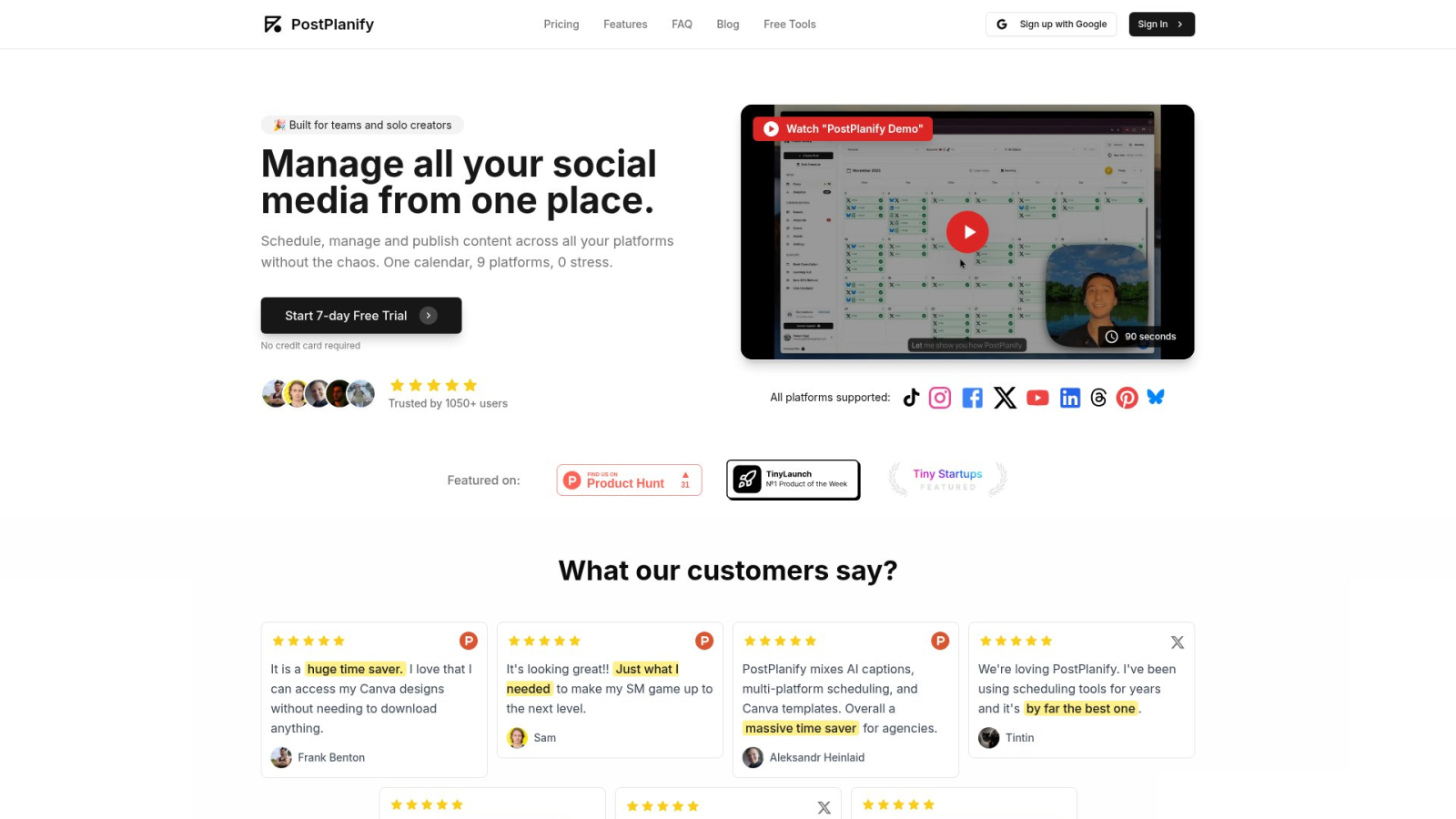
Most tools fall into one of two traps:
- They’re so simple that teams outgrow them.
- They’re so “enterprise” that creators avoid opening them.
PostPlanify is built in the middle, where most modern creator teams live.
Here’s what that looks like in practice.
1) A calendar that supports batching
Creators don’t schedule one post. They schedule 10, 30, or 60 posts in a sitting.
A tool should support:
- Bulk actions
- Reusable workflows
- Clear week and month visibility
PostPlanify is designed around reducing publishing busywork, which matters when you’re posting across Instagram, TikTok, YouTube Shorts, LinkedIn, X, Pinterest, or Facebook.
2) Platform-specific previews without guesswork
A common pain with many social media scheduling alternatives to hootsuite is that you lose formatting.
You write one caption, push it everywhere, and it looks wrong somewhere.
PostPlanify emphasizes platform-specific previews, so you can catch problems early. That includes line breaks, emoji placement, hashtag formatting, and link behavior.
3) Collaboration without the “project management” feel
You want collaboration that feels like:
- “Please approve this post.”
Not:
- “Please open this tool, find the right workspace, find the right board, check the right status, then leave a comment.”
PostPlanify keeps the workflow light.
4) Value messaging that matches what creators buy
PostPlanify also fits a creator-first growth model, including alternatives pages and free creator tools that attract high-intent traffic.
That matters because the product is being built for the people actually searching for solutions, not only for enterprise buyers.
You can start with PostPlanify and keep the workflow simple.
A practical migration path from Hootsuite
Switching schedulers feels scary until you break it into steps.
Step 1: Audit what you actually use
Before you migrate, list what matters weekly.
- Which networks do you publish to?
- Do you need an inbox, or just scheduling?
- Do you need approvals?
- Do you need analytics or reporting exports?
- Do you need bulk uploads?
Write it down. Keep it to 10 items.
Step 2: Export or copy evergreen post assets
Most creators have repeatable assets:
- Captions that perform well
- Hashtag sets
n- Creative templates - Offers and CTAs
Pull these into a simple “Evergreen Library” document. Then you can rebuild faster in the new tool.
Step 3: Recreate the calendar structure
Set up a structure that matches your content engine.
Example for creators:
- 3 posts/week on Instagram
- 3 posts/week on TikTok
- 2 posts/week on LinkedIn
- 1 YouTube Shorts batch/week
The tool should make this feel easy.
Step 4: Run a 14-day parallel test
Do not cut over on day one.
For two weeks:
- Publish the same cadence
- Track time spent scheduling
- Track publishing mistakes (formatting, wrong accounts, missing tags)
At the end, you’ll know which tool saves you time.
Step 5: Lock in your workflow
Once you confirm the tool, document a simple weekly process:
- Monday: plan content topics
- Tuesday: produce content
- Wednesday: schedule in bulk
- Thursday: review analytics and adjust hooks
- Friday: prep next week’s ideas
A tool like PostPlanify is built to support this kind of rhythm.
To get started, visit PostPlanify.
Pricing comparison and next steps

Pricing is where most teams make the final call.
But the “best deal” is not the lowest number. It’s the lowest cost per published post, with the least time spent.
So we’ll compare:
- What the tool costs
- How it scales
- What you typically have to add on
Pricing snapshot table (official sources)
| Tool | Pricing model | Pricing source |
|---|---|---|
| PostPlanify | Confirm on site | PostPlanify |
| Buffer | Tiered by plan and channels | Buffer pricing |
| Later | Per plan (sets/users/post limits) | Later pricing |
| Agorapulse | Per user | Agorapulse pricing |
| SocialPilot | Per plan | SocialPilot plans |
| Planable | Per workspace + add-ons | Planable pricing |
| Metricool | By brands | Metricool pricing |
| Sprout Social | Per seat | Sprout Social pricing |
Value-for-money table (creator team scenario)
This table is designed to answer the real question:
“What do I get for the money if I’m publishing every week?”
We’ll use a realistic scenario:
- 2-person team
- 12 social profiles
- 80 posts/month scheduled
- Needs: calendar, scheduling, previews, basic analytics, light approvals
| Tool | Likely fit for the scenario | Cost scaling risk | Value-for-money rating |
|---|---|---|---|
| PostPlanify | Strong fit for creators + small teams | Low to medium | Winner |
| Buffer | Good fit if approvals are minimal | Medium | Strong |
| Later | Strong if IG/visual-first | Medium | Strong |
| Agorapulse | Strong if inbox is required | High (per user) | Good |
| SocialPilot | Strong if agency needs mid-tier features | Medium | Good |
| Planable | Strong if approvals dominate | Medium (add-ons) | Good |
| Metricool | Strong if reporting is key | Medium | Good |
| Sprout Social | Overkill for this scenario | Very high (per seat) | Low for creators |
If you want a direct alternative to Hootsuite that stays fast, PostPlanify is the cleanest value choice for creators and small teams.
Verdict
If you’re a creator or a small team, the winner is PostPlanify.
It hits the sweet spot for social media scheduling alternatives to hootsuite:
- Fast enough for solo creators
- Structured enough for teams
- Built around publishing workflow, not dashboards
If you want to stop spending time on scheduling mechanics and start spending time on content, start your evaluation at PostPlanify.
Key takeaways
- Social media scheduling alternatives to hootsuite should be judged on time saved, not feature count.
- Per-seat pricing tools can get expensive quickly for small teams.
- PostPlanify is the best overall pick for creators and small teams who want speed and value.
- Buffer is great for simple solo scheduling.
- Later is strong for visual-first, Instagram-heavy workflows.
- Agorapulse and Sprout Social make more sense when inbox and enterprise workflows are core.
FAQs
What are the best social media scheduling alternatives to hootsuite for creators?
PostPlanify, Buffer, and Later are top picks for creators because they focus on fast scheduling and clean workflows.
Is PostPlanify better than Hootsuite?
For creator-first scheduling and a lighter workflow, yes. For enterprise listening and customer care, Hootsuite may fit better.
Which tool is best for agencies that need approvals?
Planable is strong for approvals and client review flows. PostPlanify is a strong alternative if you want approvals without heavy process.
Which Hootsuite alternative is best for analytics?
Metricool and Agorapulse are strong for reporting. Sprout Social is powerful but expensive.
How do I switch without breaking my posting schedule?
Run a 14-day parallel test. Keep your cadence the same, measure time saved, then cut over once the workflow is stable.
Leave a Reply